
Deflation, Economic War, and the Quiet Shift Reshaping the World
When Money Stops Existing
When Money Stops Existing
(Milan Adams, PreppGroup) - For most of modern history, money has been treated as something constant—something stable enough to build entire lives around. We plan futures with it, measure success through it, and depend on it for survival. But there is a hidden assumption behind all of this: that money will always be available, always moving, always functioning.
That assumption has failed before.
And the uncomfortable reality is that the conditions forming today look disturbingly familiar—just dressed in a more advanced, more controlled system.
Deflation is often misunderstood as simply “falling prices,” but in reality, it is something far more dangerous. It is what happens when money becomes scarce—not because it physically disappears, but because it stops circulating. When people stop spending, banks stop lending, and businesses stop investing, the entire system begins to lock up. Prices don’t just fall; value collapses. Work disappears. Confidence evaporates.
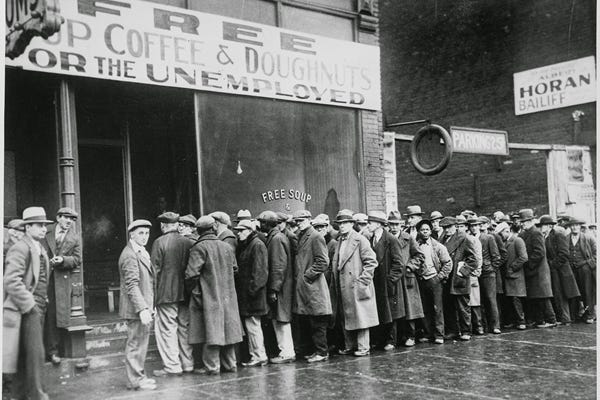
In the 1930s, during the Great Depression, this process was visible and chaotic. Banks failed publicly. People stood in lines trying to withdraw their savings. Entire communities ran out of cash and resorted to bartering. But today’s system is different. Over 90% of global money now exists digitally, meaning a crisis would not necessarily look like panic in the streets—it could unfold quietly, through restrictions, delays, and policy decisions that most people barely understand until it is too late.
What makes the current moment particularly fragile is…
rothschild jewish bankers cult is gonna destroy the world economy and now they want US to give over everything to them to destroy even faster and worse for our worst enemy cuz they are trying everything to take over America and there’s a lot of treason going on and there should be a lot of swinging