
Did the Articles of Confederation Fail? Probably Not
The Constitution was a plan for more Central Power
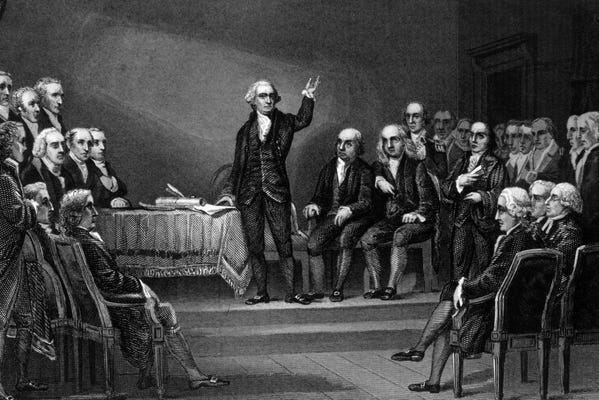
The Constitution was a plan for more Central Power
(Mises.Org) - The first plan the Framers tried after declaring independence was called the Articles of Confederation. The government that the Articles created failed because it was too weak to coordinate national policy among states with different priorities.
Now, this is not particularly a criticism of the Constitution, though I believe there is room for that. But, I simply want to raise questions: What if the Articles were not failing? What if they were doing exactly what they were intended to do? What if the Articles were successful, but success was not in the agenda of powerful people?
First, consider the words above: “...it was too weak to coordinate national policy among states with different priorities.” Exactly! But that’s not why it failed. That was precisely why it was created. The regions and the states did have different priorities. Yes, Rhode Island could, on its own, veto legislation. When other states agreed to a tariff, Rhode Island could—as a lone New England state—say no. Of course, the other 12 states were welcome to pass their own tariffs and donate the revenues to the central government. Why did Rhode Island have to do what they did? That was no failure, it was success. In fact, the Constitution made demands on all of the regions and states that violated their priorities.
Second, the Articles of Confederation demonstrated that a weak central government was not incapable of accomplishing what needed to be done. But, it did demonstrate that the causes and purposes to which the national government took action needed to be in the interest of all, or it needed to be handled on a local basis. But, keep in mind that it was under the Articles government that the War for Independence had been won. It was under the Articles that the…
Great and needed piece! Thanks!