
How Confederate Memory Became the Blueprint for America's Cultural Revolution
THE FIRST ERASURE!
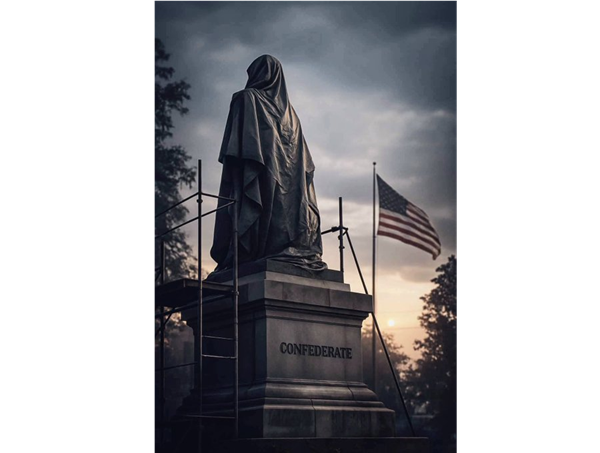
THE FIRST ERASURE!
(Mindy Esposito on X) - In recent years, Americans have struggled to understand how their nation — long anchored by shared history, faith, and civic identity — could suddenly feel unmoored. Retired Lt. Gen. Michael Flynn’s assessment of an attempted cultural revolution explains much of this turmoil. But when viewed through the lens of Southern history, a deeper truth becomes clear: Confederate memory was not only an early casualty of this ideological struggle — it was the proving ground.
Long before the nation realized what was happening, Southern monuments, graves, flags, and historical narratives were quietly placed under assault. What seemed like isolated controversies were in fact early experiments in coercion, censorship, and the rewriting of memory. The destruction of Confederate heritage was the pilot program for a much larger transformation.
Confederate History as the First Test Case
The American cultural revolution could not succeed without first weakening the nation’s historical foundations. Confederate memory offered a politically convenient target — safe to attack, unlikely to trigger broad institutional resistance, and rich with symbolic power. Confederate symbols were removed under cover of darkness, vandalized without consequence, stripped of historical nuance, and recast as badges of collective guilt. Anyone who questioned this narrative found themselves smeared, silenced, or socially punished. If society could be trained to accept the erasure of one region’s history, activists reasoned, the rest of…
Lots of shady things went down in the execution of the so-called “Civil War”…