
How the United States Government Itself Legally Recognized the Sovereign Confederate States
AND Proved Secession Was Always Constitutional
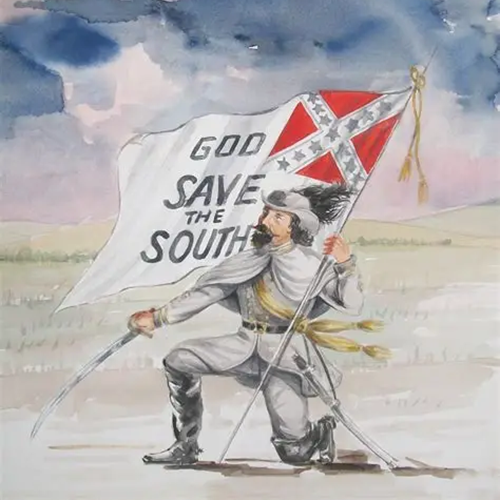
The Armistices That Shattered the Myth of Illegal Secession: How the United States Government Itself Legally Recognized the Sovereign Confederate States and Proved Secession Was Always Constitutional
The solemn armistices negotiated at Charleston on December 8, 1860 (often dated as December 6 in some accounts, reflecting the initiation of talks), and at Pensacola on January 29, 1861, stand as unassailable proof of the United States’ de facto recognition of the Confederate States of America—or at least the Sovereign Independence of South Carolina and Florida following their ordinances of Secession—thereby affirming the absolute Constitutional legality of Secession under the Tenth Amendment’s reservation of undelegated powers to the States.
In the Charleston Armistice, President James Buchanan’s administration, through intermediaries, entered into a binding understanding with South Carolina’s delegation, pledging no reinforcement of Fort Sumter in exchange for no attacks on federal positions in Charleston Harbor, a pact documented in Buchanan’s correspondence and the South Carolina commissioners’ letter of December 28, 1860, which noted the U.S. government’s commitment to maintain the status quo while acknowledging South Carolina’s resumed “separate and equal place among nations.”
This was no mere internal administrative directive but a negotiated truce with a Seceded State that had declared its independence on December 20, 1860, treating South Carolina not as a rebellious province but as a Sovereign entity capable of entering international-style agreements—precisely as Vattel’s Law of Nations (Book II, Chapter XVIII, § 201, 1758) defines armistices as…