
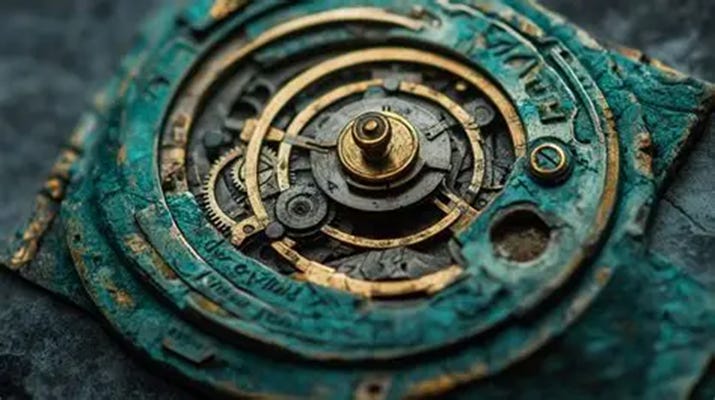
Experts Are Quietly Raising Concerns About Artifacts That Do Not Fit Our History
(PreppGroup) - There is a strange pattern in archaeology that no one officially talks about, yet anyone who spends enough time digging through old reports, forgotten journals, and obscure museum records will eventually notice it. Every few decades, somewhere in the world, an object is discovered that does not quite belong to the time it is found in. Not dramatically out of place in a way that screams impossibility, but subtly wrong in a way that makes experts uncomfortable. Too precise. Too advanced. Too refined. Too… early.
Individually, each discovery is easy to dismiss. A dating error. A misinterpretation. A hoax. Contamination of a site. The explanations are always reasonable when viewed in isolation. But when you start lining them up side by side, across continents and centuries, the pattern becomes harder to ignore. The same types of anomalies appear again and again, discovered by different people, in different places, in different eras, all pointing toward the same unsettling implication: there are objects in our historical record that do not fit the timeline we teach.
What makes this particularly unsettling is not the objects themselves, but the reaction they tend to provoke. These are not celebrated discoveries. They do not become the centerpieces of museums. They are rarely the subject of documentaries. They are mentioned briefly, cautiously, in academic literature, and then quietly fade into obscurity. Not because they were debunked, but because discussing them too openly creates questions that lead somewhere uncomfortable.
Questions about when certain knowledge really appeared. Questions about…
We have been kept in the dark for a long time for a reason