
The Cross of Saint Andrew: From Scotland to the Confederate South
Ultimately, the enduring power of the saltire lies not in governments or armies but in its oldest and deepest meaning. It recalls an apostle who chose humility over honor, faith over fear.
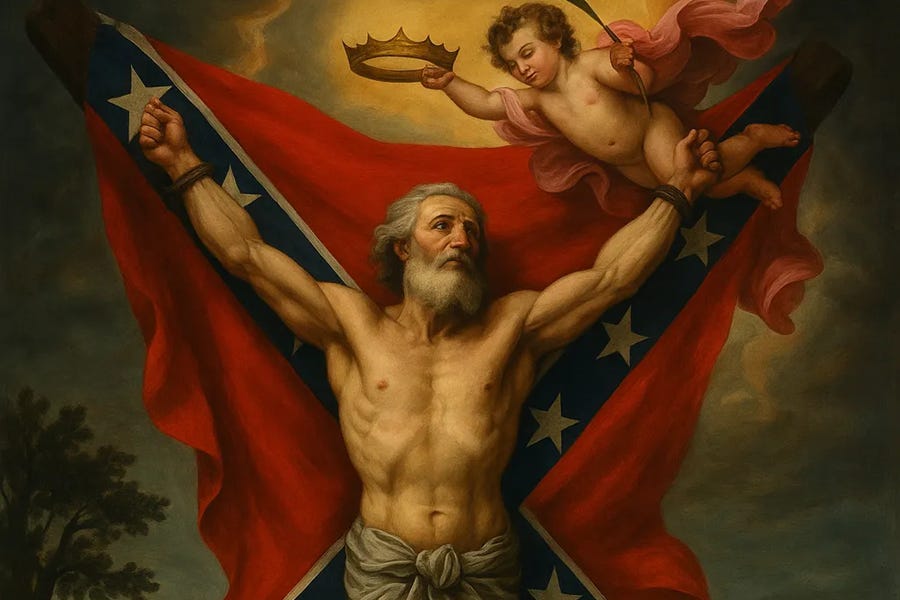
Ultimately, the enduring power of the saltire lies not in governments or armies but in its oldest and deepest meaning. It recalls an apostle who chose humility over honor, faith over fear, and steadfast conviction over worldly power.
(Owen Wright, The Southern Academic Series) - Among the most recognizable Christian symbols in the Western world is the diagonal cross, or saltire, of Saint Andrew. Long before it became associated with kingdoms, nations, or military banners, the saltire represented the steadfast faith and martyrdom of one of Christ’s first disciples. Through the centuries, this simple yet powerful emblem came to symbolize sacrifice, humility, courage, and fidelity under suffering. It became the national emblem of Scotland and, centuries later, inspired the battle flag of the Confederate States of America. Though separated by time, geography, and political circumstance, both Scotland and the Confederacy drew upon the same ancient Christian tradition in adopting the Cross of Saint Andrew.
Saint Andrew, the brother of Saint Peter, was among the earliest followers called by Jesus Christ. A fisherman by trade upon the Sea of Galilee, Andrew immediately answered Christ’s invitation to become a “fisher of men.” Following Christ’s crucifixion, resurrection, and ascension, Andrew journeyed widely as a missionary, preaching throughout regions surrounding the Black Sea and into Greece. His ministry ultimately led him to the city of Patras, where he was arrested for refusing to cease preaching the Gospel.
According to early Christian tradition, Andrew was sentenced to death by crucifixion. Out of humility, he declared himself unworthy to die upon the same upright cross as Jesus Christ. Instead, he requested that his executioners place him upon a diagonal cross. Bound rather than nailed, Andrew is said to have remained alive for two days, continuing to preach Christ to all who gathered around his execution. His final testimony transformed what had been an instrument of execution into a…
