
The Precedent for State Sovereignty is Firmly Established
Major U.S. Supreme Court Cases That Support State Sovereignty
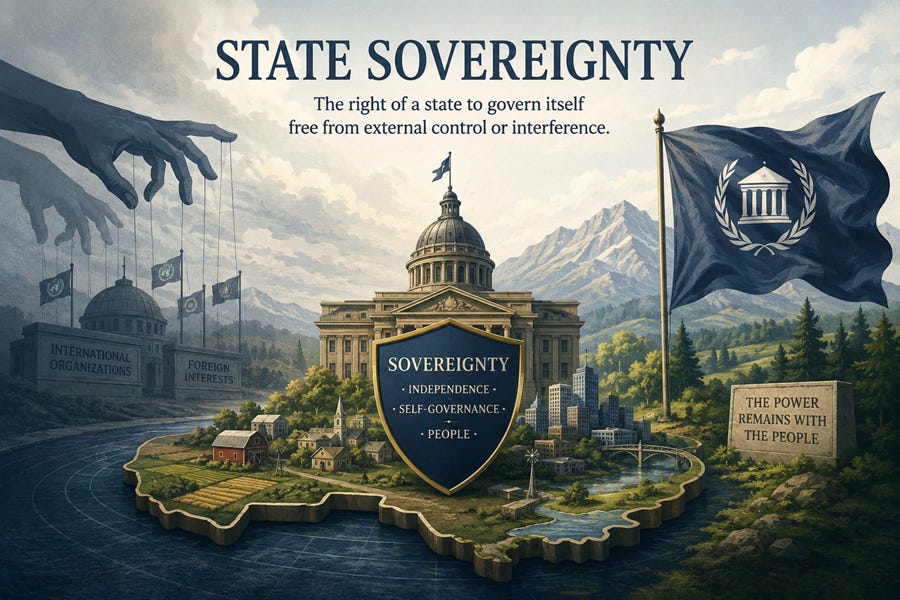
Major U.S. Supreme Court Cases That Support State Sovereignty
(Dixie Drudge) - State sovereignty has been a central feature of the American constitutional system since the founding of the United States. While the federal government possesses significant authority, the Constitution reserves many powers to the states. Over the years, several landmark Supreme Court decisions have reinforced the principle of state sovereignty and clarified the balance of power between Washington and the states.
What Is State Sovereignty?
State sovereignty refers to the authority of individual states to govern themselves in areas not delegated to the federal government by the Constitution. The concept is rooted in the Tenth Amendment, which states that powers not delegated to the United States nor prohibited to the states are reserved to the states or the people.
Key Supreme Court Cases Supporting State Sovereignty
1. McCulloch v. Maryland (1819)
Although often viewed as a victory for federal power, this case also established important limits on state and federal authority. The Court ruled that Maryland could not tax a federal bank, reinforcing the principle that state and federal governments operate within separate constitutional spheres.
2. New York v. United States (1992)
This landmark decision strengthened state sovereignty by establishing the “anti-commandeering doctrine.” The Supreme Court held that Congress cannot compel states to enact or administer federal regulatory programs.
Key takeaway: The federal government cannot simply order state governments to carry out federal policies.
3. Printz v. United States (1997)
Building on New York v. United States, the Court ruled that the federal government could not require local law enforcement officers to conduct background checks under the Brady Handgun Violence Prevention Act.
Impact: States and their officials cannot be conscripted into federal service.
4. Alden v. Maine (1999)
The Court ruled that states possess sovereign immunity and generally cannot be sued by private citizens without their consent.
Why it matters: This decision reaffirmed that states retain a degree of sovereignty within the federal system.
5. National Federation of Independent Business v. Sebelius (2012)
While the Court upheld much of the Affordable Care Act, it limited federal power by ruling that Congress could not coerce states into expanding Medicaid through the threat of losing existing funding.
Result: States retained the ability to choose whether to participate in Medicaid expansion.
The Importance of the Tenth Amendment
Many modern state sovereignty decisions rely heavily on the Tenth Amendment. The Supreme Court has repeatedly emphasized that the Constitution created a federal government of limited and enumerated powers. When federal authority exceeds those powers, states may challenge federal actions in court.
Common Principles Found in State Sovereignty Cases
States retain substantial constitutional authority.
The federal government cannot commandeer state officials.
States possess certain forms of sovereign immunity.
Federalism creates a balance between national and state power.
The debate over state sovereignty remains highly relevant in modern America. Cases such as New York v. United States, Printz v. United States, and Alden v. Maine demonstrate that the Supreme Court continues to recognize constitutional limits on federal authority. Understanding these landmark rulings provides valuable insight into the ongoing balance between state governments and the federal government.
What are your thoughts on federalism and state sovereignty? Share this article, leave a comment, and join the discussion about the future of constitutional government in America.

Like I said just get it over with and kick everybody who hates our country and rinos or democrats or earth state can open up a season of libtards antifa illegals etc will leave soon as we stop fuckin around cuz they are all criminals anyway and I don’t think many will cry for pedo children trafficking