
They Used to be Common Defensive Weapons. Then Government Got Involved - #2A
How SBRs and SBSs Got Trapped in the NFA’s 1934 Gun Control Scheme
How SBRs and SBSs Got Trapped in the NFA’s 1934 Gun Control Scheme
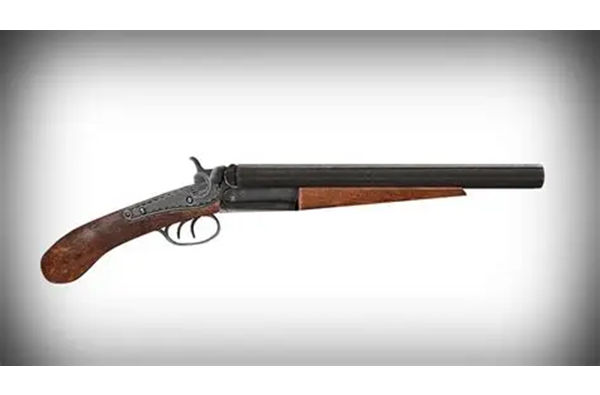
(AmmoLand) - The story of how short-barreled rifles (SBRs) and short-barreled shotguns (SBSs) ended up regulated under the National Firearms Act (NFA) of 1934 is one of the clearest examples of unnecessary federal overreach, bureaucratic accident, and enduring infringement on Second Amendment rights. What began as a panicked response to 1930s gangster violence morphed into a permanent regulatory trap that punishes law-abiding Americans for owning common, useful firearms, configurations that have legitimate sporting, defensive, and historical purposes, while doing virtually nothing to stop actual crime.
In the early 1930s, America was gripped by sensational headlines about organized crime: the St. Valentine’s Day Massacre, Bonnie and Clyde’s exploits, and Al Capone’s Thompson submachine guns. Politicians and the media hyped “gangster weapons,” with sawed-off shotguns singled out as tools of the underworld. Attorney General Homer Cummings and the Justice Department pushed for federal action, but they knew an outright ban on firearms would likely violate the Second Amendment. Instead, they cleverly used Congress’s taxing power to create a de facto prohibition through heavy fees, registration, and paperwork.
The initial bill, H.R. 9066, was far broader than the bill that passed. It targeted machine guns, silencers, short-barreled shotguns and rifles (under 18 inches), handguns, pistols, and revolvers.
The $200 transfer tax (equivalent to roughly $4,800–$5,000 today) was designed to be prohibitive, pricing ordinary citizens out while…
Damn I am still upset about it cuz I had a holster like James caan in El Dorado and a hundred rounds in a case
I had one I got from my uncle who was a cop