
Three American Declarations: Two Of Independence, One Against #NationalDivorce
Two out of three usually wins, unless the one is by a Tyrant
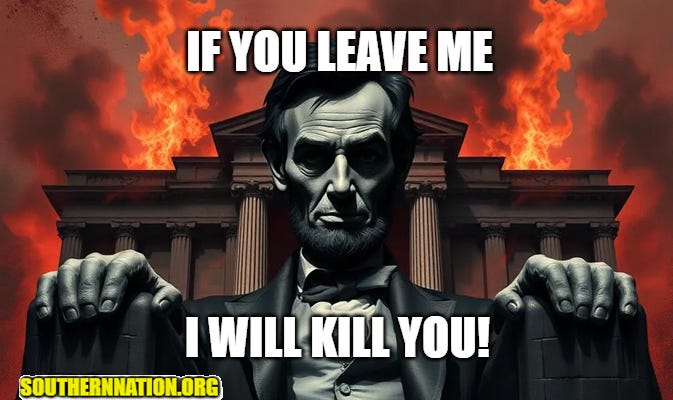
Another outstanding and thought-provoking read by the great Thomas DiLorenzo from Lew Rockwell - DD
(Thomas DiLorenzo, LewRockwell.Com) - Three of the most important American political declarations are the Declaration of Independence, Jefferson Davis’s inaugural address, and Abraham Lincoln’s first inaugural address. The first was a declaration of secession from the British empire. The second was a declaration of secession from the Washington, D.C empire. The third was a declaration of non-independence, ever, under any circumstances, from the D.C. empire – or else.
The legitimate purpose of government, Jefferson famously wrote in the Declaration, was to secure God-given unalienable rights to life, liberty, and the pursuit of happiness. Whenever government becomes “destructive of these ends,” then “it is the Right of the People to alter or to abolish it, and to institute a new Government . . .” It is “the Right of the People” to secede.
After the long listing of the “train of abuses” by the government of King George III, Jefferson reminded the world that it was each individual colony or state, joining in a confederacy of united states, that was seceding from the British empire. The representatives of the individual states, he wrote, assembled to “publish and declare” that “these United Colonies are, and of Right ought to be Free and Independent States; that they are Absolved from all Allegiance to the British Crown . . . and that as Free and Independent States, they have full Power to levy War, conclude Peace, contract Alliances, establish Commerce, and to do all other Acts and Things which independent States may of right do.” The individual, free and independent “States,” in the plural, had rights to do all of these things, said Jefferson. The individual American states were thought to be free and independent in the same sense that France and England were free and independent states.
Twenty-seven years later, in response to a query by John Breckinridge, who had served as Jefferson’s attorney general, about the burgeoning New England Federalist secession movement Jefferson wrote that if there was to be a “separation” into two confederacies, “God bless them both…
I’m ready for CSA to dump the district of criminals and start our own government