
What does it mean to be “Southern”?
The Question of OUR Age...
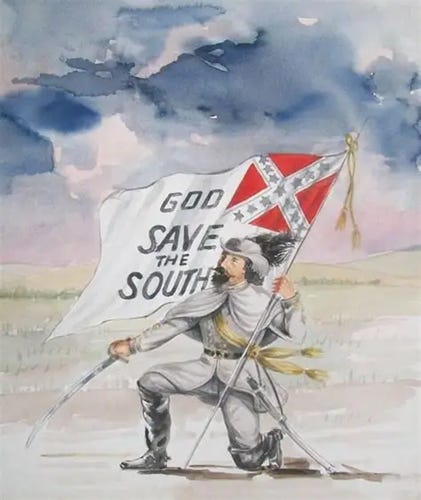
The Question of Our Age…
(Brion McClanahan, The Abbeville Institute) - What does it mean to be “Southern”?
This question has vexed Americans since the founding.
Every American knew that sectional differences existed. George Mason, for example, worried that the “Eastern States” would plunder the agricultural States further south. He drafted an amendment that would have prevented “navigation laws,” i.e. protective tariffs, for that reason. Gouverneur Morris openly suggested that if the differences between the States were too great to reconcile in 1787, they should immediately part ways and abandon any hope of union.
That might have been a good thing, but with only around four million people huddled along the coast and threatened by hostile neighbors—both European and American—most Americans argued that some form of Union was necessary. So, Southerners and Northerners embraced federalism as a necessary component of sectional harmony.
The South could remain “Southern.” That reflected both economics and culture.
For some Americans, Southern revolved around the institution of slavery, though in 1776, every American State was a “slave State.” South Carolina and Georgia seemed to be wedded to the institution more fervently than the other States. Yet, George Washington openly complained that Great Britain did not return captured New York slaves at the end of the War in 1783.
Views on race were not unique to the South. Southerners were no more “racist” than their Northern compatriots, and perhaps, arguably, less so as they lived in a bi-racial society and mingled with…